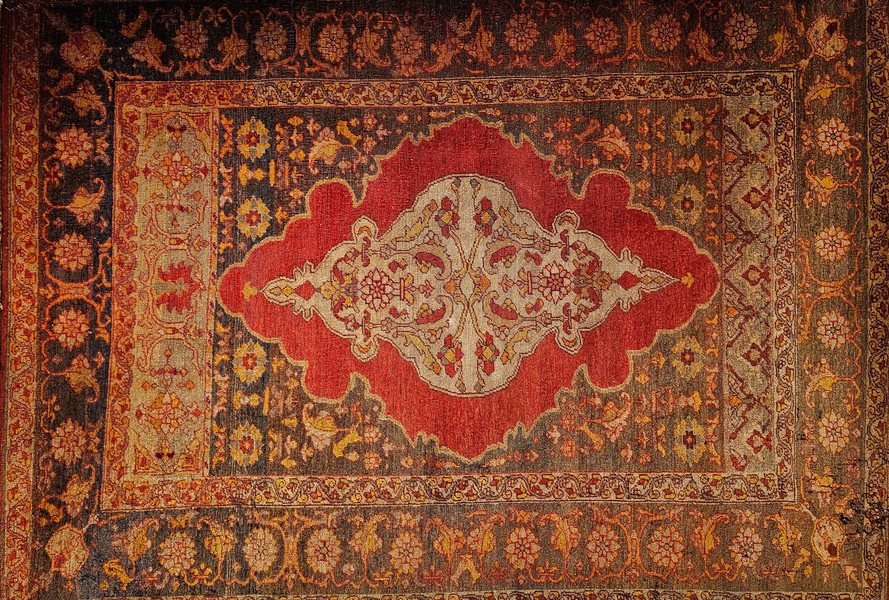
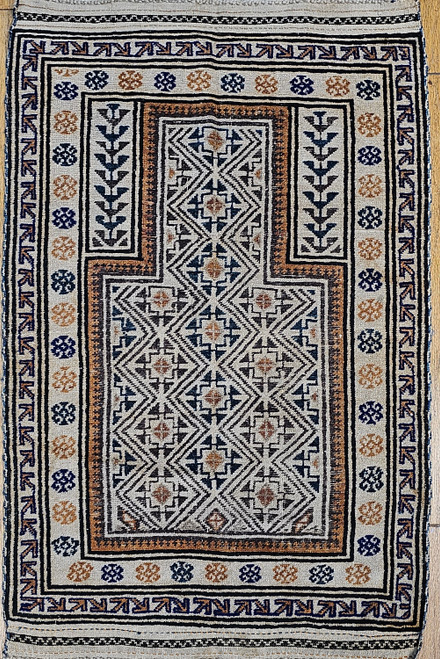
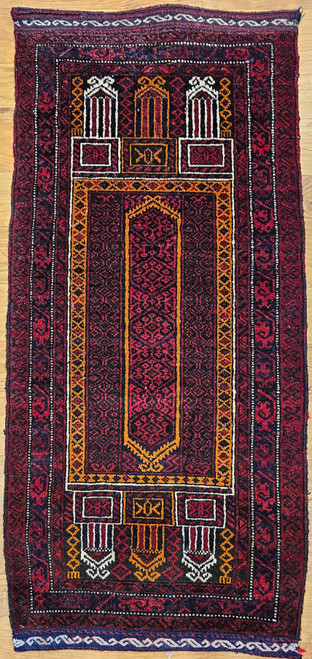
This early 20th century Baluch kilim flatweave is the companion piece to Baluch bagface 1295A — together they formed a complete vintage Baluch grain sack, used by the Baluch tribes of southeastern Persia for storing and transporting grain during their seasonal migrations. The kilim served as the flatwoven back of the bag, providing structure and durability, while the bagface (1295A) served as the more elaborately decorated front panel.
Displayed side by side on a wall, these two companion pieces tell the complete story of a traditional Baluch tribal storage bag — the decorative front and the functional reverse of a single object that was once central to nomadic life. Together they make a rare and historically significant pair of tribal textile wall art that documents both the artistry and the utilitarian ingenuity of the Baluch weaving tradition. The Baluch tribes — seminomadic peoples living across the vast territories of southeastern Persia, southwestern Afghanistan, and western Pakistan — have produced some of the most quietly beautiful and spiritually resonant tribal rugs in the world. Baluch rugs are distinguished by their deep, brooding palette of dark navy, midnight blue, and rich red, their exceptionally lustrous wool pile, their fine flat-woven kilim ends, and a geometric design vocabulary rooted in ancient symbolic traditions. Though small in scale — most Baluch rugs are prayer rug or scatter size — they are large in artistic and collecting significance.