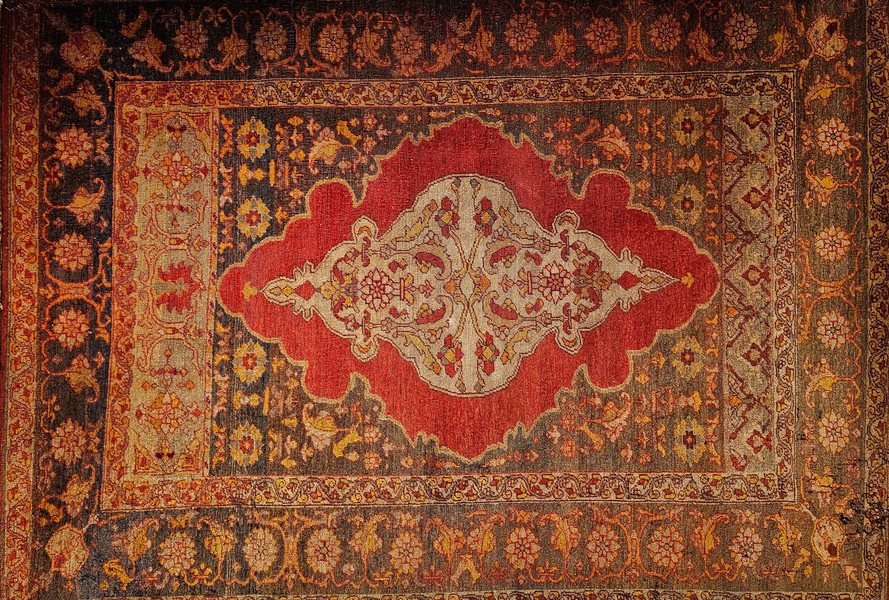
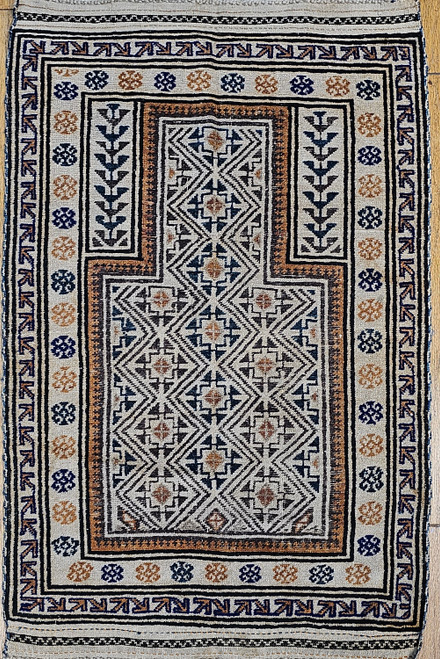
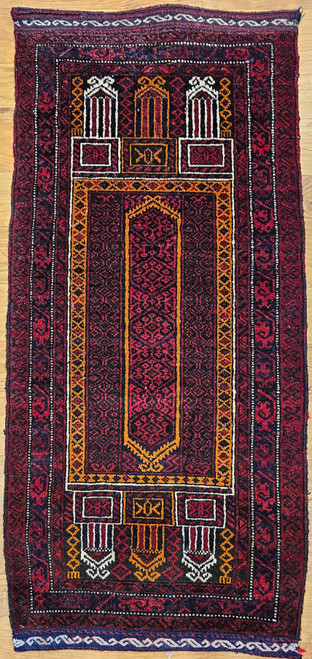
A beautiful early 20th century Baluch tribal bagface, hand-knotted as the decorated face of a small nomadic bag — likely a salt or spice bag, used by the Baluch tribes of southeastern Persia to carry essential household commodities during their seasonal migrations. The Baluch brought the same care and artistry to these small utilitarian objects as they did to their larger prayer rugs and floor coverings, creating works of genuine folk art in even the most functional formats.
Now freed from its original purpose, this bagface has found a new life as a display piece — wall-mounted as textile art, placed on a table as a decorative object, or used as the face of a small decorative pillow. Its compact format, strong geometric design, and authentic tribal character make it a rewarding and accessible entry point into the world of Baluch textile collecting. The Baluch tribes — seminomadic peoples living across the vast territories of southeastern Persia, southwestern Afghanistan, and western Pakistan — have produced some of the most quietly beautiful and spiritually resonant tribal rugs in the world. Baluch rugs are distinguished by their deep, brooding palette of dark navy, midnight blue, and rich red, their exceptionally lustrous wool pile, their fine flat-woven kilim ends, and a geometric design vocabulary rooted in ancient symbolic traditions. Though small in scale — most Baluch rugs are prayer rug or scatter size — they are large in artistic and collecting significance.
- Dimensions: 10" x 26"
- Date of Manufacture: 1st Quarter of the 1900s
- Place of Origin: Central Asia
- Material: Wool on a wool foundation with Vegetable dyes
- Condition: Wear consistent with age and use
SKU: 1631