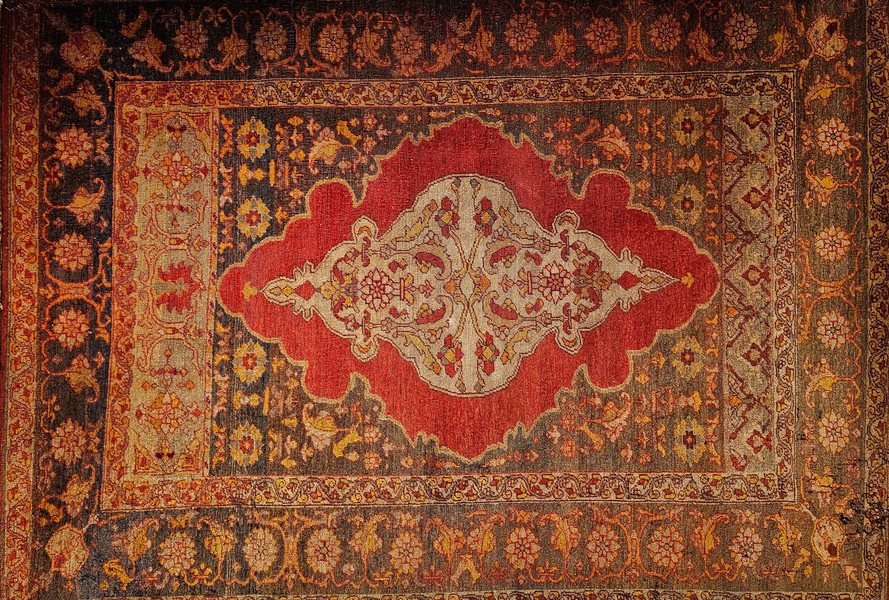

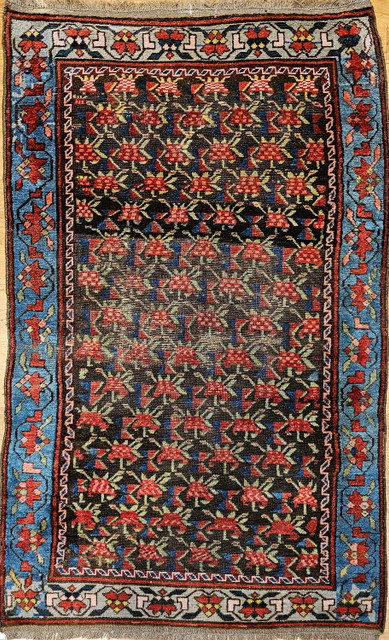
The Most Sustainable Rug You Can Buy Is One That Already Exists
Posted by The Persian Knot Gallery on May 6th 2026
We get asked about sustainability a lot these days. And honestly, it's one of our favorite conversations to have — because the answer, when it comes to rugs, is so much simpler than people expect.
The most sustainable rug you can buy is one that already exists.
That's it. No complex certification to decode, no greenwashing to sort through. A rug that was handwoven 100 years ago, from natural wool and plant-based dyes, has already done its part. There was no factory. There's no new carbon cost. It's simply here — beautiful, durable, and ready for another century of use.
What Most People Don't Think About When They Buy a New Rug
Walk through any large furniture store today and you'll find plenty of rugs that look great in photos and come at prices that feel almost too good. And in a way, they are. Most of those rugs are factory-made, often from synthetic or low-grade fibers, with chemical dyes, produced in facilities that consume significant energy and water. They're shipped in containers across oceans. And they're designed — whether intentionally or not — to be replaced in a few years when the style shifts or the fibers start to break down.
We're not saying this to be judgmental. We've all bought something like that at some point. But when clients come to us asking how to make a more responsible choice for their home, this is the honest answer: the production cycle of a typical new rug carries a real environmental cost that's easy to overlook when you're looking at a pretty picture online.
What Goes Into a Vintage Handwoven Rug
The rugs we carry were made in a completely different world — one where industrial manufacturing simply didn't exist in the weaving regions of Persia, Anatolia, the Caucasus, and Central Asia.
The wool came from local flocks. The dyes came from plants, insects, and minerals found nearby — pomegranate rinds, indigo, madder root, walnut husks. The loom was wooden. The knots were tied by hand, one at a time, across months or sometimes years of careful work.
No factories. No synthetic chemistry. No container ships.
That production process ended a long time ago. The rug already exists. And when you bring it home, its carbon footprint going forward is essentially zero.
These Rugs Are Built to Last — Really Last
Here's something that surprises a lot of first-time buyers: a well-maintained antique rug doesn't just hold up over time. It gets better. The natural wool develops a warm, living patina that no new rug can replicate. The colors mellow and deepen in ways that synthetic dyes simply can't achieve.
The rugs in our collection are typically 75 to 150 years old. They've already lived through multiple families, multiple homes, multiple generations of daily use. And with proper care — professional washing every year or two, a good pad underneath, protection from prolonged direct sun — they'll do it again for another hundred years.
Compare that to the average factory rug, which typically starts showing real wear within three to seven years. The math on environmental impact isn't even close.
Repair Instead of Replace
One of the things we love most about what we do is helping people keep a rug in their life longer — whether that's a piece from our collection or something they already own.
We offer professional repair services: re-weaving damaged areas, fringe repair, pet stain and odor treatment, professional hand washing. We can also resize a rug to fit a new space — something that comes up more than you'd think when clients move to a smaller home or want to place an inherited piece in a room with different proportions.
Every repair is a rug that doesn't end up discarded. Every resizing is a piece that continues its story instead of ending it. That feels meaningful to us, and we think it does to a lot of our clients too.
A Note for Designers
We work with a lot of interior designers, and sustainability has become a real part of how many of them talk to their clients about sourcing decisions. A vintage handwoven rug is one of the clearest, most honest answers to that conversation.
It has a documented age. It was made from natural materials. It has zero new production cost. And it's almost always more distinctive and more beautiful than anything currently being manufactured.
If you're working on a project where sustainability is part of the brief — or even just part of the conversation — we're happy to help you find the right piece. Our Trade & Design program is built around exactly that kind of working relationship.
The Simple Version
You don't have to think too hard about this. A rug that was handwoven 100 years ago from natural wool and plant dyes, that has already served two or three families, and that will last another hundred years with basic care — that's about as responsible a choice as you can make for your floor.
It's also, we'd argue, a more beautiful one.
Browse our current collection of vintage and antique handwoven rugs at thepersianknot.com, or contact us at 847 382 1031 to discuss a specific piece or project.