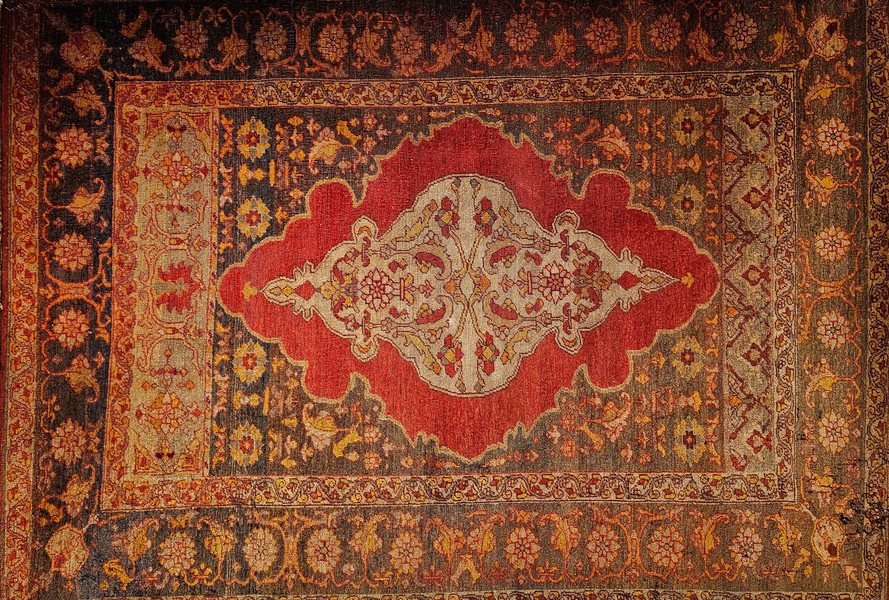
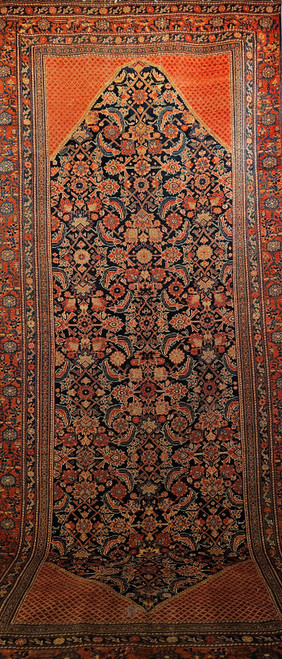
This vintage Persian Malayer area rug from the second quarter of the 20th century is a timeless example of traditional Persian design with enduring aesthetic appeal — the classic Herati geometric pattern set against a rich rust red field that brings warmth and character to any interior. A striking medallion in vibrant Persian blue creates a bold focal point at the heart of the composition, complemented by matching blue corner spandrels that enhance the symmetry and visual balance.
The narrow ivory border adorned with delicate motifs provides a refined contrast to the deeper tones of the field — a compositional strategy that gives this small rug a formal completeness far beyond its modest dimensions. At 2 by 3 feet, it works beautifully as an accent piece, a table display, or a wall-mounted textile. The Malayer district of Western Persia — located in the Hamadan province, east of the Zagros Mountains — produced village rugs of remarkable quality and diversity throughout the 19th and early 20th centuries. Malayer rugs are distinguished by their fine weave, their inventive use of design formats drawn from both the Hamadan and Sarouk traditions, and a palette of naturally dyed wool whose depth and complexity reward close study. The finest Malayer rugs, particularly those in the camel hair field and Herati allover formats, are among the most sought-after village rugs of Western Persia.