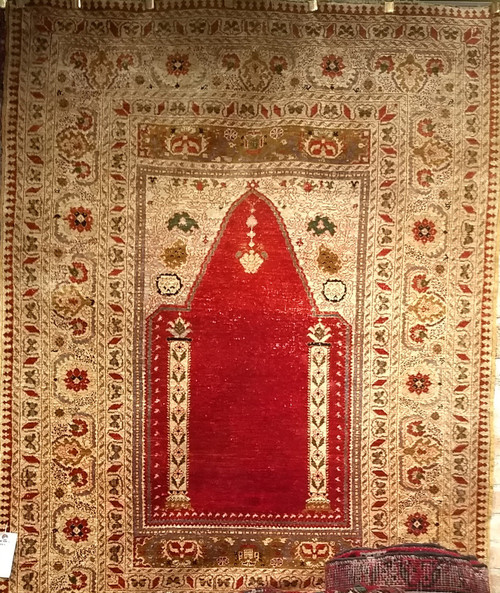
This exquisite 19th century Anatolian Konya Ladik rug features a distinguished prayer design of rare refinement, most notably characterized by an exceptionally wide border — one of the most elegant and expressive border treatments associated with the Konya weaving tradition of Central Anatolia. The harmonious palette of rich reds, blues, greens, and yellows has been achieved through natural vegetable dyes, each color mellowed with age into the complex, nuanced tones that only genuine antique textiles with more than a century of history carry.
The Konya Ladik tradition produced some of the most refined and artistically ambitious prayer rugs of the 19th century Anatolian village weaving world — pieces that balanced the strict formal requirements of the prayer rug format with a freedom and exuberance of design that sets them apart from all other traditions. This piece comes from the private collection of a San Francisco rug connoisseur. The Anatolian prayer rug tradition is one of the most ancient and spiritually resonant in the entire textile world. The mihrab — the arched niche that orients the rug toward Mecca — gives these rugs their distinctive directional quality and their connection to the devotional life of Islam. Village prayer rugs of the 19th and early 20th century are among the most personal and expressive textiles ever made, each a unique expression of the individual weaver's artistic sensibility within a form of deep religious significance.
This finely woven piece comes from the private collection of a San Francisco rug connoisseur and exemplifies the cultural heritage, craftsmanship, and aesthetic refinement that define the finest Central Anatolian rugs.
Dimensions: 4' 4" x 6' 5"
Date of Manufacture: 4th Quarter of the 19th Century
Place of Origin: Anatolia (Konya Ladik)
Material: Wool pile on a wool foundation with vegetable dyes