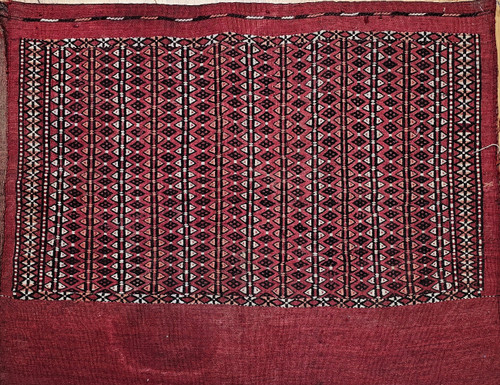
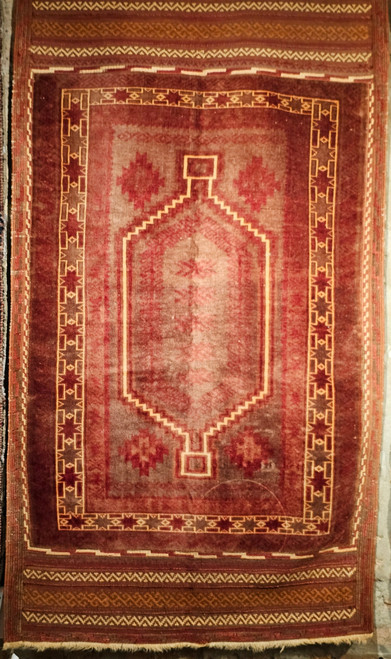
This refined 19th-century Baluch tribal bag is a superb example of nomadic craftsmanship, combining elegant geometry with a soft, harmonious color palette. Woven in the soumak technique, the front panel features a finely articulated geometric pattern in pale blue and warm brown, set against a luminous ivory ground. Subtle tonal variations within the blue-green hues reflect the use of natural vegetable dyes, creating a depth and movement that can only be achieved through traditional hand-dyeing.
Distinctive ornamental tassels and an original carrying cord enhance the bag’s sculptural presence while attesting to its authentic tribal origin. Unlike many surviving examples that retain only a single decorative panel, this exceptional piece includes both side panels and the original banded kilim back, offering a rare and complete representation of how these bags were constructed and used.
Among the Baluch tribes of eastern Persia and Afghanistan and Central Asia, such bags served to store and transport treasured family belongings, textiles, and important documents on travels on the ancient Silk Road. Today, this beautifully preserved textile can be enjoyed either as a functional collectible or displayed as 19th-century nomadic wall art, bringing history, texture, and global character into curated interior spaces.
- Dimensions: 21” x 23” (Excluding the tassels)
- Date of Manufacture: 4th Quarter of the 1800s
- Place of Origin: Central Asia
- Material: Wool pile on a cotton foundation with vegetable dyes
- Condition: Good
SKU: 2331
Make an Offer/Product Inquiries