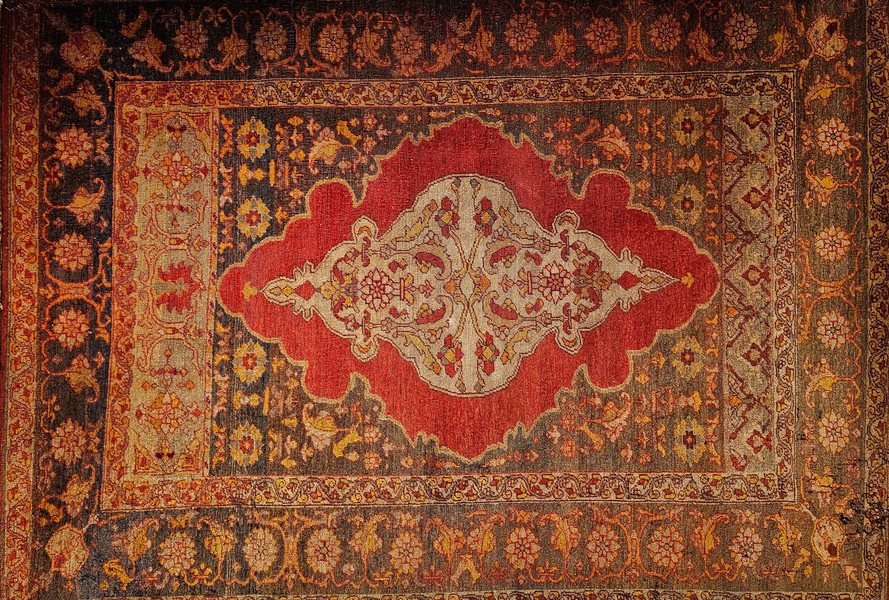
This vintage Persian Heriz Karajeh area rug, hand-knotted in the second quarter of the 20th century, features the iconic Karajeh pattern of three geometric medallions set against a cream field. The medallions in rich green and red tones are framed by a striking navy border, creating a balanced and timeless composition. A fine example of Northwest Persian village weaving, this rug combines bold geometry with traditional craftsmanship that rewards both close inspection and appreciation from across a room.
The Karajeh sub-type of the Heriz weaving tradition — taking its name from the village of Karajeh north of Tabriz — is distinguished by its characteristic three-medallion column format, its unusually fine weave for the region, and a palette that often features the sought-after green and ivory color combinations that collectors prize most highly. Heriz rugs, woven in the village of Heriz and surrounding towns of the Azerbaijan region in Northwest Persia, are among the most recognized and beloved antique Persian carpets in the world. Distinguished by their bold geometric medallions, their warm brick-red and ivory palettes, and the exceptional durability of their double-wefted construction, Heriz rugs have furnished the grand rooms of Europe and America since the late 19th century. The finest early examples — particularly those designated Serapi, woven in the 19th century villages north of Heriz — are among the most actively collected antique rugs in the world today.
Dimensions: 1' 11" x 2' 10"
Date of Manufacture: 2nd Quarter of the 1900s
Place of Origin: NW Persia (Karajeh village)
Material: Wool pile on a cotton foundation with vegetable dyes