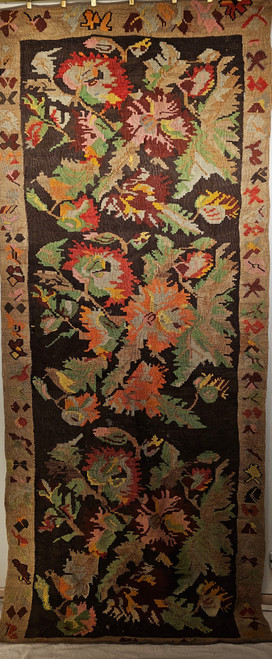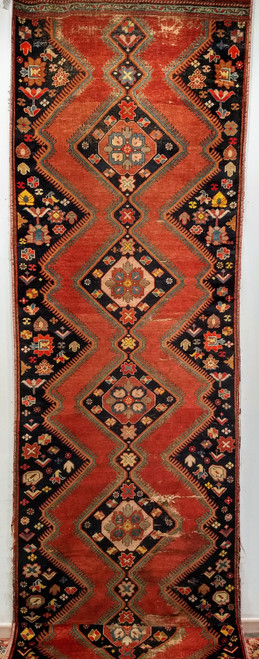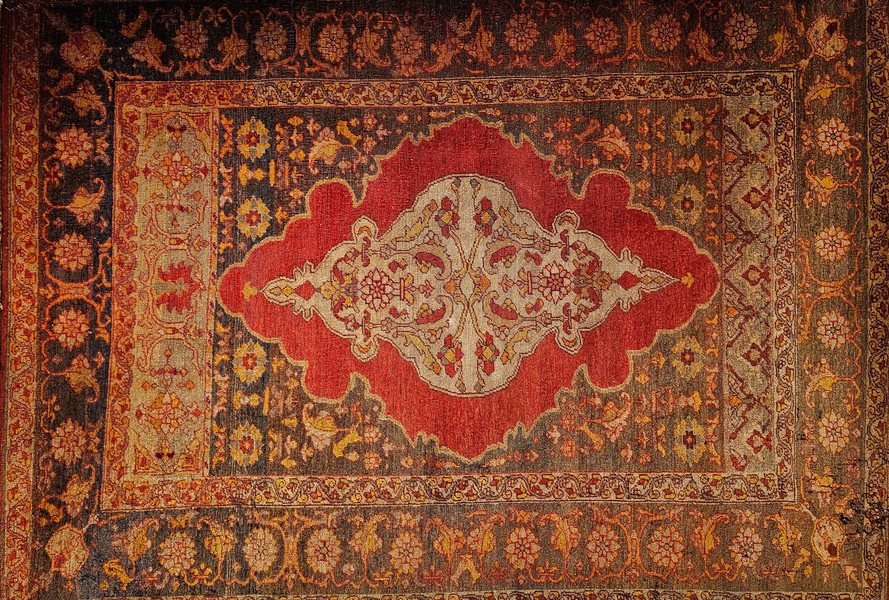
This exceptional mid-19th century Caucasian Karabagh gallery rug features one of the rarest and most coveted field colors in all of antique rug weaving — a luminous pistachio green, softly abrash and shifting between pale green and warm earthy brown in the natural way of hand-dyed vegetable wool. The field is animated by a dynamic allover geometric medallion design in deep blue, emerald green, brick red, brown, and golden yellow that fills the enormous surface with the confident energy of the Karabagh tradition at its finest.
At 7 by 18 and a half feet, this is a gallery and dining room scale piece of the highest order — and the rarity of its pistachio green field makes it doubly exceptional. The richly saturated dark brown primary border, intricately decorated with multicolored geometric motifs, frames the composition with the visual weight this piece demands. A century and a half of age has produced a naturally worn patina that only enhances the beauty of the colors. The Karabagh region of the southern Caucasus — a mountainous territory of extraordinary cultural richness shared between Armenia and Azerbaijan — produced some of the most vibrantly colored and boldly designed rugs and kilims in the Caucasian weaving tradition. Karabagh weavers were renowned above all for their use of intense, saturated natural dye colors, their exuberant floral compositions — often compared to French Impressionist paintings — and the sheer visual energy that defines the finest pieces from this celebrated region.
Dimensions: 7' x 18' 6"
Date of Manufacture: 3rd Quarter of the 1800s
Place of Origin: Armenia (Karabagh), Caucasus
Material: Wool pile on a wool foundation with vegetable dyes