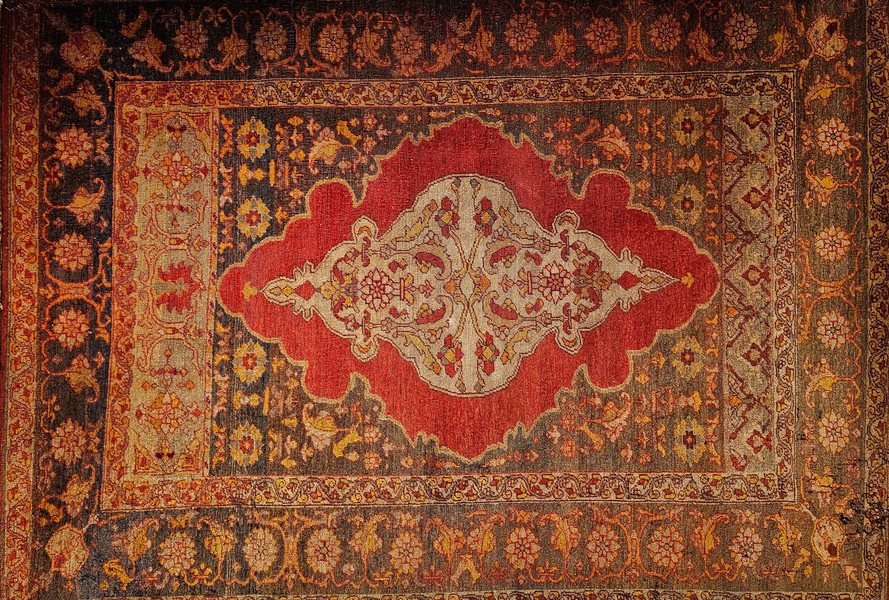
This exquisite late 19th century Caucasian Kazak rug features three striking medallions woven in vibrant abrash shades of green and blue, set against a rich antique red field of extraordinary depth and warmth. The bold border showcases large-scale motifs in red, yellow, green, and ivory on a deep navy ground — a composition of powerful color contrast and visual authority that exemplifies the Kazak tradition at its most confident.
The abrash — natural tonal variation in the hand-dyed wool — runs through both the medallions and the field, giving the piece a living quality that rewards extended viewing and that no machine-woven textile can replicate. Renowned for their artistry and luminous vegetable-dyed colors, Kazak village rugs have been actively collected since the early 20th century, and this finely preserved example is a true collector's acquisition. Kazak rugs, woven by village artisans in the mountainous region of the South Caucasus — encompassing present-day Armenia, Azerbaijan, and Georgia — are among the most boldly designed and vibrantly colored tribal rugs in the world. Their large-format geometric medallions, brilliant vegetable-dyed palette, and the thick, lustrous pile made from high-altitude mountain wool have made them enduringly sought after by collectors and interior designers who prize authenticity, energy, and the beauty of genuine handcraft.
Dimensions: 4' 9" x 7' 1"
Date of Manufacture: 4th Quarter of the 1800s
Place of Origin: Caucasus
Material: Wool pile on a wool foundation with vegetable dyes