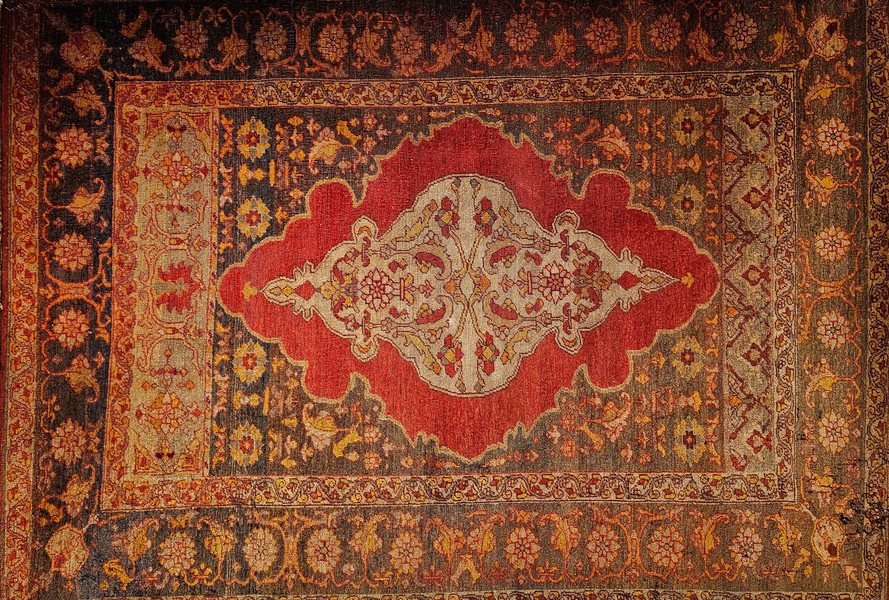
This vintage Persian Malayer area rug from the early 20th century showcases a highly sought-after allover geometric design — the uninterrupted patterning creating a versatile and visually rhythmic surface of great decorative power. The navy blue field is richly adorned with repeating small-scale rosette motifs rendered in nuanced shades of blue, pink, dark gold, and ivory, the intricate yet orderly arrangement lending the rug both decorative depth and a timeless elegance.
Caramel-toned and blue borders animated with floral rosettes that echo the field provide a cohesive and lively visual transition from the dense central pattern to the outer frame. The allover format — with no central medallion to anchor the composition — creates a visual continuity that many designers find more flexible and versatile than medallion designs. The Malayer district of Western Persia — located in the Hamadan province, east of the Zagros Mountains — produced village rugs of remarkable quality and diversity throughout the 19th and early 20th centuries. Malayer rugs are distinguished by their fine weave, their inventive use of design formats drawn from both the Hamadan and Sarouk traditions, and a palette of naturally dyed wool whose depth and complexity reward close study. The finest Malayer rugs, particularly those in the camel hair field and Herati allover formats, are among the most sought-after village rugs of Western Persia.