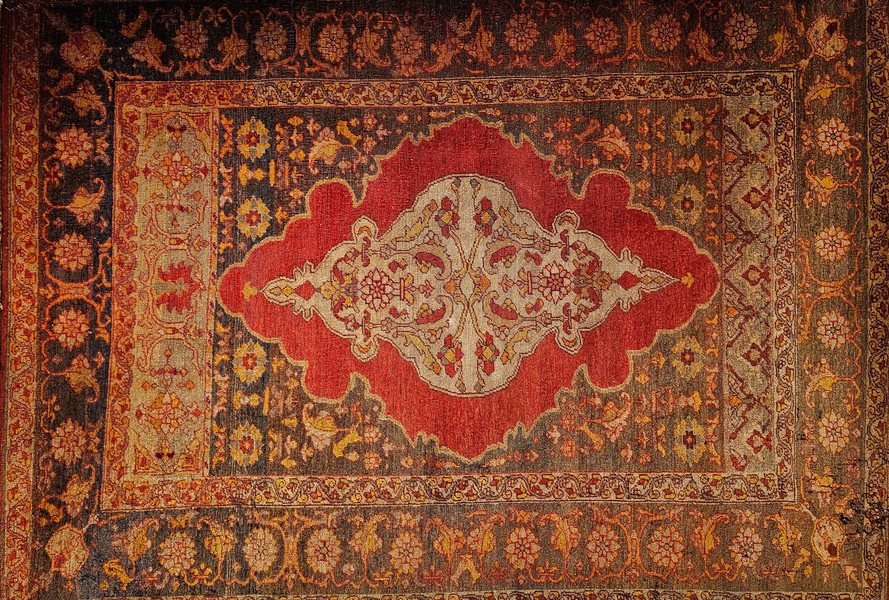
A rich piece of tribal history, this exceptional late 19th century Persian Luri tribal bagface is a remarkably well-preserved example of the expressive weaving tradition of the Lur people of Western and Southwestern Persia. Dating from the fourth quarter of the 1800s, this bagface likely served as a vital component of a mafrash — the large storage bag that the Luri nomads used to transport household goods during their seasonal migrations across the Zagros Mountains.
The large, bold designs and vibrant colors that fill both the central field and the border create a visually striking composition of great tribal energy — designs woven not for distant collectors but for the practical and aesthetic needs of a nomadic household, with the confidence and creative freedom that comes from weaving within a living tradition. Best displayed as wall art, where its full visual impact can be appreciated. Tribal bags, bagfaces, and saddlebags represent some of the most intimate and personal textile objects ever made by the nomadic and semi-nomadic tribes of Persia, the Caucasus, and Central Asia. Created for daily functional use — carrying salt, spices, grain, tools, and household goods during seasonal migrations — these small weavings were nonetheless executed with extraordinary care and artistry. Today, freed from their original purpose, they are treasured as works of art: wall-mounted, displayed on tables, or repurposed as pillows — miniature windows into the weaving traditions of the tribal world.