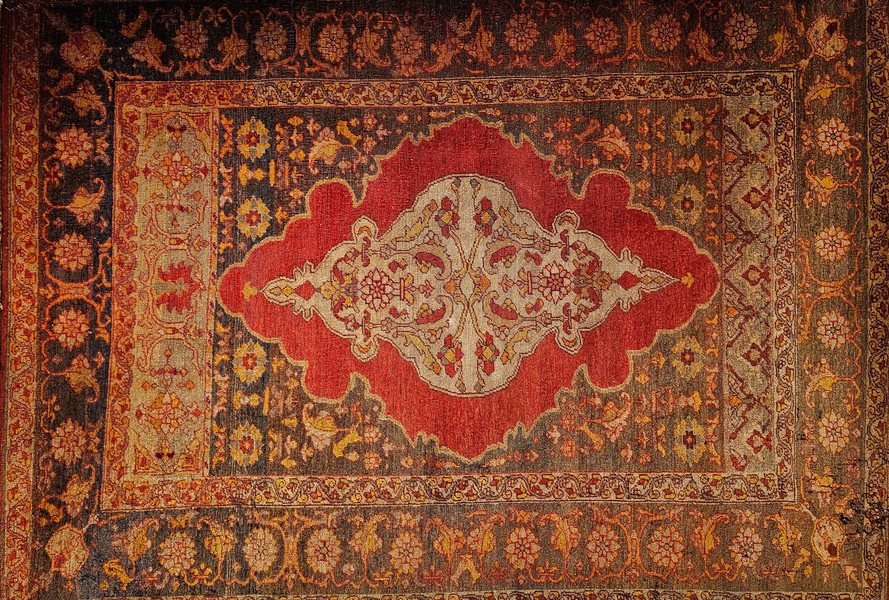

This exquisite 19th century Shahsavan bagface from the Azerbaijan region of Northwest Persia is a striking example of tribal textile artistry at its most technically accomplished. Crafted in the late 1800s, it originally served as the face of a saddlebag or as a side panel of a mafrash — the large storage bag that was central to the nomadic life of the Shahsavan tribal confederacy, one of the most celebrated weaving peoples of the Northwest Persian world.
The combination of kilim flatweave and richly textured soumak techniques in a single small piece reflects the extraordinary technical mastery of Shahsavan weavers — artisans who could move seamlessly between weaving traditions and whose work consistently exhibits a level of technical complexity far beyond the average tribal production. The soumak detailing adds intricate surface decoration and dimensional depth that elevates this functional object into a work of genuine artistic significance. Tribal bags, bagfaces, and saddlebags represent some of the most intimate and personal textile objects ever made by the nomadic and semi-nomadic tribes of Persia, the Caucasus, and Central Asia. Created for daily functional use — carrying salt, spices, grain, tools, and household goods during seasonal migrations — these small weavings were nonetheless executed with extraordinary care and artistry. Today, freed from their original purpose, they are treasured as works of art: wall-mounted, displayed on tables, or repurposed as pillows — miniature windows into the weaving traditions of the tribal world.
Dimensions: 2' 2" x 2' 4"
Date of Manufacture: 4th Quarter of the 1800s
Place of Origin: NW Persia (Shahsavan, Azerbaijan)
Material: Wool pile on a wool foundation with vegetable dyes