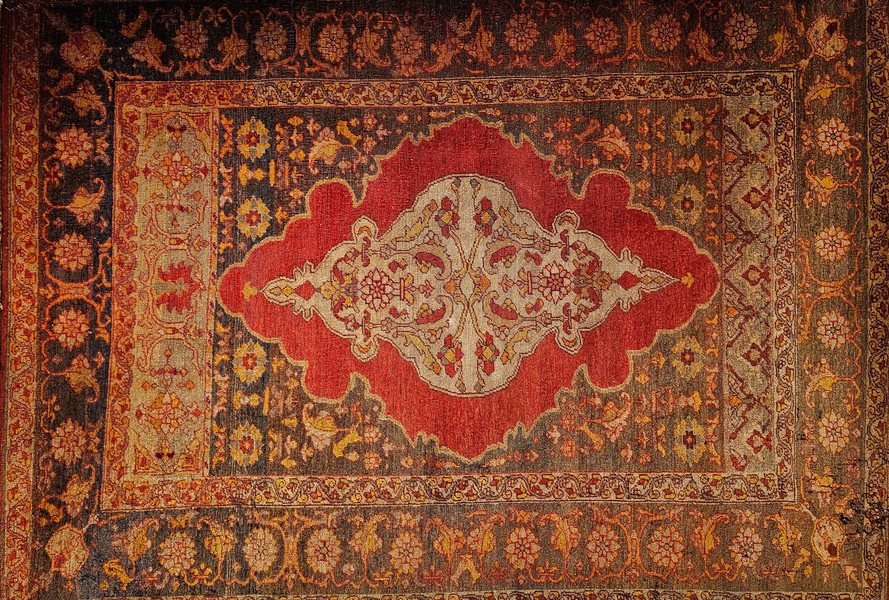
This antique Persian Malayer rug from the early 1900s is a rare and delightful piece — an elegant allover design set in a soft pale pink field that evokes the aesthetic sensibilities of the Arts and Crafts movement then flourishing in the Western world at the time of its weaving. The soft palette and organic design vocabulary — particularly a delicate row of flowers in the lower portion of the field — reflect the shared values of craftsmanship, natural beauty, and honest materials that connected the Arts and Crafts movement with the finest Persian village weaving traditions.
The composition is framed by multiple borders in distinct designs and colors, adding rhythm and visual complexity to the piece. The pale pink field is itself unusual in the Malayer tradition, making this a genuinely distinctive and collectable example. The Malayer district of Western Persia — located in the Hamadan province, east of the Zagros Mountains — produced village rugs of remarkable quality and diversity throughout the 19th and early 20th centuries. Malayer rugs are distinguished by their fine weave, their inventive use of design formats drawn from both the Hamadan and Sarouk traditions, and a palette of naturally dyed wool whose depth and complexity reward close study. The finest Malayer rugs, particularly those in the camel hair field and Herati allover formats, are among the most sought-after village rugs of Western Persia.
Dimensions: 3' 6" x 4' 7"
Date of Manufacture: 1st Quarter of the 1900s
Place of Origin: Persia (Malayer district)
Material: Wool pile on a cotton foundation with vegetable dyes