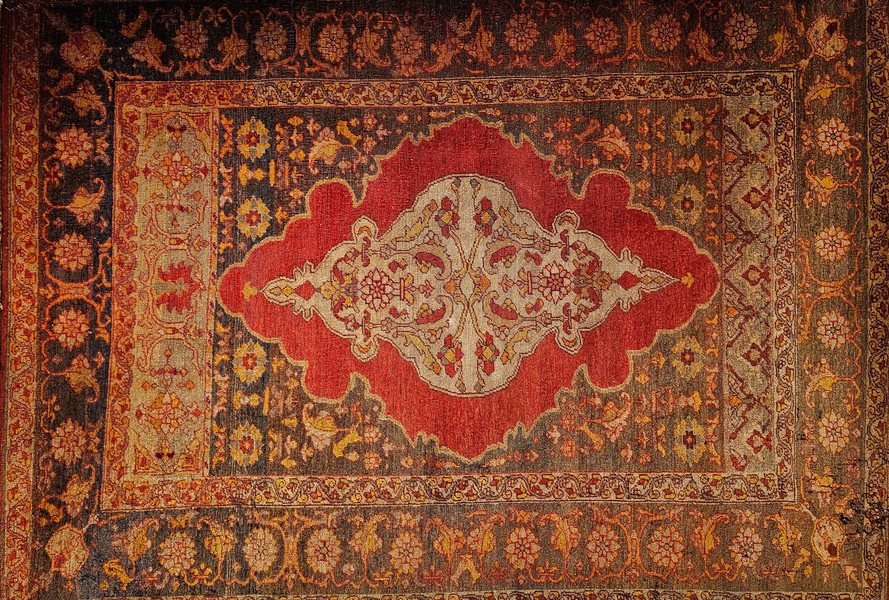
A companion piece to Shahsavan Bagface 1471, this late 19th century Shahsavan bagface from Northwest Persia was woven by the nomadic Shahsavan tribes of Azerbaijan — masters of the kilim and soumak weaving techniques that gave their textiles an extraordinary complexity and beauty. The piece likely served as the face of a saddlebag or as a side panel of a mafrash, the large storage bag essential to nomadic life during the seasonal migrations of the Shahsavan people.
Like its companion, this bagface combines kilim flatweave sections with richly detailed soumak-woven design elements — a technical achievement that sets Shahsavan bagfaces apart from the simpler flatweave bags of other tribal traditions. The natural organic dyes have mellowed over more than a century into a palette of subtle, earthy richness. Tribal bags, bagfaces, and saddlebags represent some of the most intimate and personal textile objects ever made by the nomadic and semi-nomadic tribes of Persia, the Caucasus, and Central Asia. Created for daily functional use — carrying salt, spices, grain, tools, and household goods during seasonal migrations — these small weavings were nonetheless executed with extraordinary care and artistry. Today, freed from their original purpose, they are treasured as works of art: wall-mounted, displayed on tables, or repurposed as pillows — miniature windows into the weaving traditions of the tribal world.
Dimensions: 1' 8" x 1' 10"
Date of Manufacture: 4th Quarter of the 1800s
Place of Origin: Northwest Persia (Shahsavan, Azerbaijan)
Material: Wool pile on a wool foundation with natural organic dyes