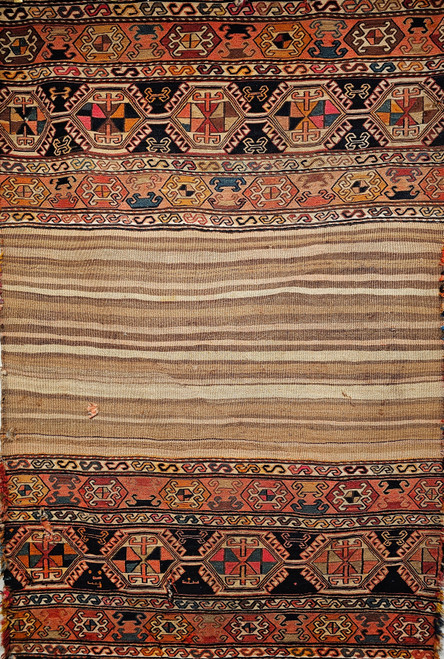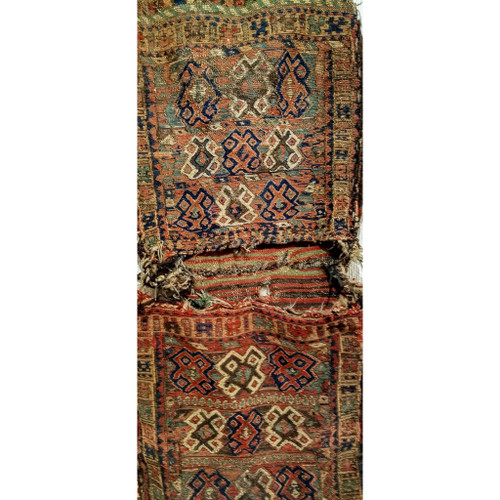
This exceptional 19th Century Persian Shahsavan Soumak kilim represents one of the rarest and most sought-after village weavings in our collection. Woven by Shahsavan tribal artisans of northwestern Persia, this piece exemplifies extraordinary technical refinement, cultural authenticity, and artistic sophistication.
Handwoven using very fine, hand-spun wool and dyed entirely with natural vegetable pigments, the kilim displays remarkable clarity and balance of color. The composition is elegantly divided into three distinct sections: a striking central field featuring a rhythmic striped motif in warm terracotta, soft ivory, and deep indigo, flanked by two outer panels showcasing distinct and highly refined Soumak weaving patterns. The nuanced contrasts and precision of execution speak to the weaver’s exceptional skill.
Originally created as a tent textile, this kilim was intended for both functional use and aesthetic expression within a nomadic environment. Due to the fineness of its weave, refined palette, and architectural composition, it is especially well-suited today as tribal or village textile wall art, making a compelling focal point in curated interiors.
Dimensions: 22” x 51”
Date of Manufacture: 4th Quarter of the 1800s
Place of Origin: Persia
Material: Wool pile on a wool foundation with vegetable dyes