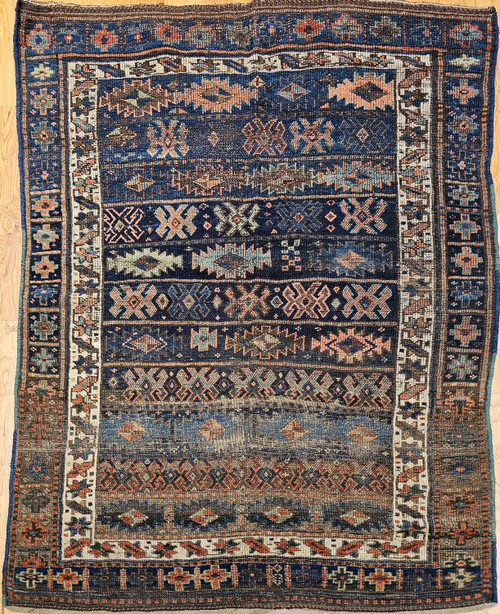
This exquisite 19th-century Shahsavan bagface, woven in the Azerbaijan region of northwestern Persia, is a striking example of tribal textile artistry. Crafted in the late 1800s, it may have originally served as the face of a saddlebag or as a side panel of a mafrash—a large storage bag used by nomadic tribes.
Woven with a combination of kilim and richly textured soumak techniques, this piece showcases the Shahsavan weavers’ mastery of form, function, and design. The soumak detailing adds intricate surface decoration and dimension, elevating the textile from a utilitarian object to a work of art.
Dimensions: 2’ 2” x 2’ 4”
Date of Manufacture: 4th Quarter of the 1800s
Place of Origin: NW Persia
Material: Wool pile on a wool foundation with vegetable dyes