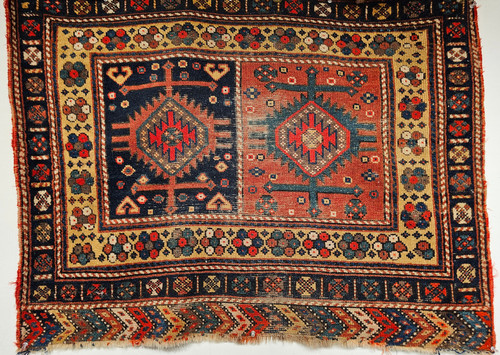
A beautiful example of Caucasian village weaving, this 19th century Kazak bagface features a dynamic freestyle geometric pattern in rich tones of blue, brown, and red — woven in the late 1800s with the spontaneous energy and bold improvisation that characterize the finest Caucasian tribal textiles. This compact hand-knotted piece likely served as a bagface — the decorated front of a tribal storage or animal bag — or possibly as a small personal prayer rug.
The freestyle geometric pattern, bold color palette, and improvisational layout showcase the authenticity and creative spontaneity of traditional Caucasian design at its most immediate and personal — qualities that distinguish authentic tribal textiles from all later, commercially produced imitations. Its small size and strong visual presence make it ideal as textile wall art or a collectible centerpiece for display on a table or shelf. Kazak rugs, woven by village artisans in the mountainous region of the South Caucasus — encompassing present-day Armenia, Azerbaijan, and Georgia — are among the most boldly designed and vibrantly colored tribal rugs in the world. Their large-format geometric medallions, brilliant vegetable-dyed palette, and the thick, lustrous pile made from high-altitude mountain wool have made them enduringly sought after by collectors and interior designers who prize authenticity, energy, and the beauty of genuine handcraft.
Dimensions: 1' 10" x 2'
Date of Manufacture: 4th Quarter of the 1800s
Place of Origin: Caucasus
Material: Wool pile on a wool foundation with vegetable dyes